Mold vs. Mildew: What's the Difference and Why It Matters
Mold and mildew are often used interchangeably, but they are very different problems with very different consequences. Here's what every LA homeowner needs to know.
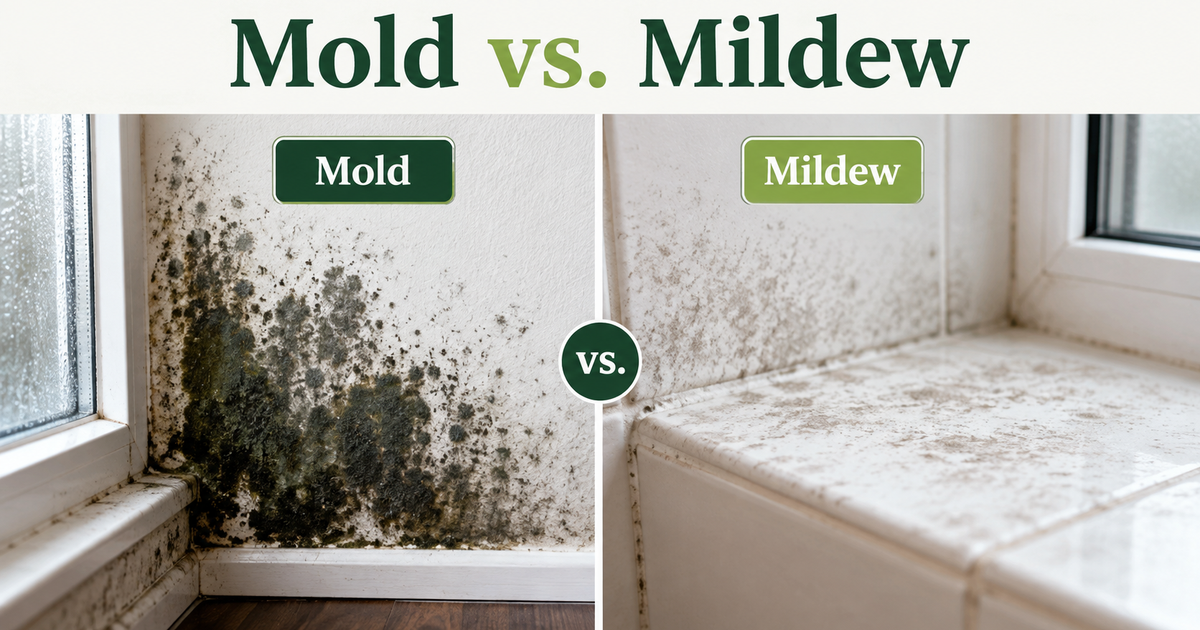
If you've ever spotted a dark patch on your bathroom wall or a powdery film on your windowsill, you've probably wondered: is that mold or mildew? Most people use the two words interchangeably, but they are not the same thing, and the difference matters a great deal for your health, your home, and how you respond to it.
What Is Mildew?
Mildew is a surface-level fungus. It typically appears flat, powdery, or fluffy and is usually white, gray, or light yellow in color. It grows on damp, warm surfaces, shower tiles, window sills, fabric, paper, and stays on the surface rather than penetrating the material beneath.
The good news: mildew is relatively easy to clean. A store-bought cleaner and a scrub brush can usually take care of it. It can cause mild respiratory irritation and a musty smell, but it rarely causes serious structural damage or significant health problems in otherwise healthy individuals.
What Is Mold?
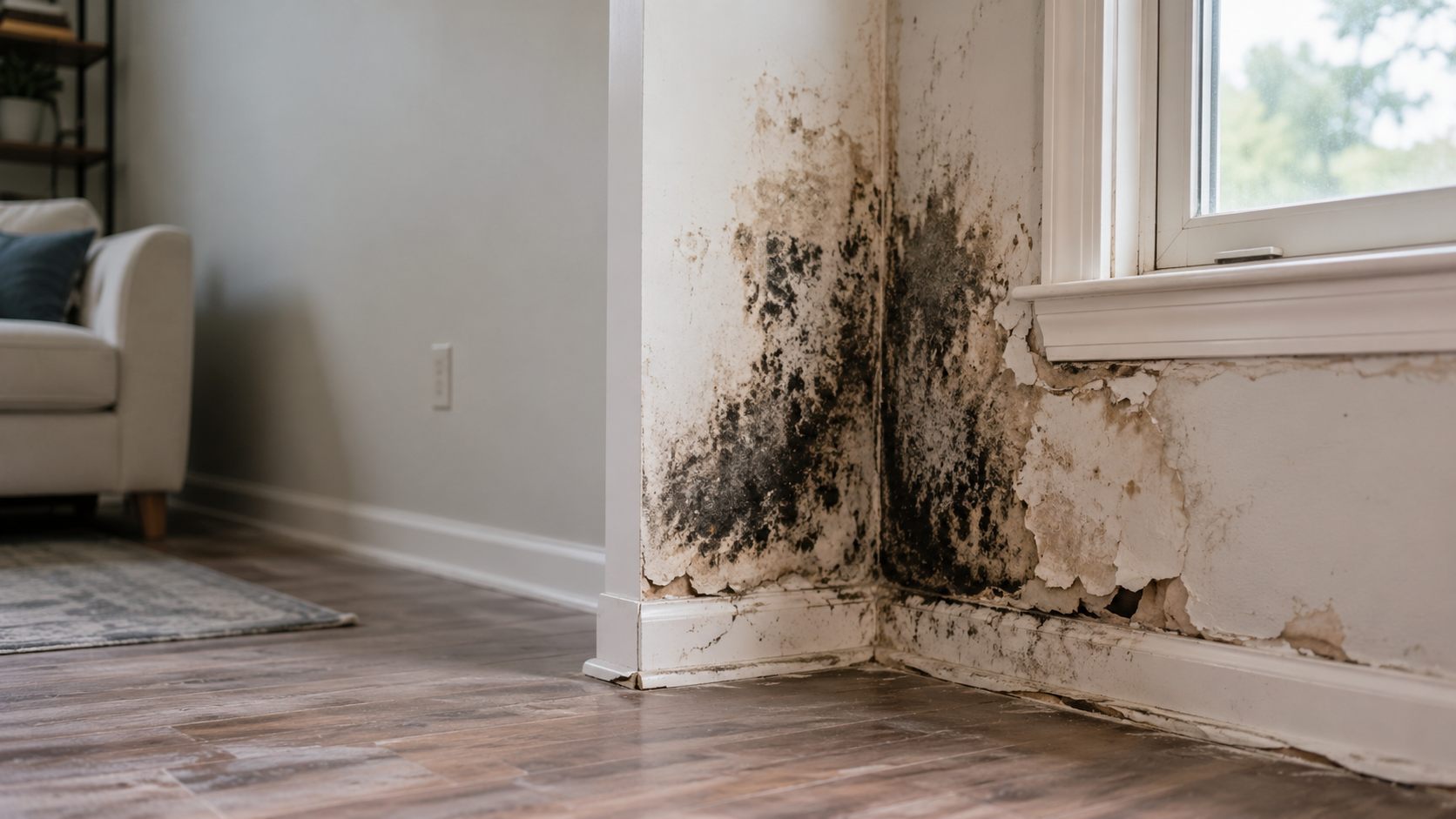
Mold is a different story. It is a fungus that grows in multicellular filaments called hyphae, and it penetrates deep into the surfaces it colonizes, drywall, wood framing, insulation, carpet padding. Mold is typically darker in color: black, green, brown, or even orange or pink depending on the species.
Unlike mildew, mold cannot simply be wiped away. Because it grows into the material, surface cleaning only removes what you can see, the root structure remains and the mold returns. Proper remediation often requires removing and replacing the affected material entirely.
Key Differences at a Glance
| Mildew | Mold | |
|---|---|---|
| Appearance | Flat, powdery, white/gray | Fuzzy, raised, dark colors |
| Growth pattern | Surface only | Penetrates deep into materials |
| Common locations | Tile, fabric, paper | Drywall, wood, insulation |
| Health effects | Can irritate sensitive people | Can cause symptoms in sensitive people (see CDC guidance below) |
| DIY cleanup | Usually possible | Small areas often possible once the moisture is fixed; larger areas may need a professional |
| Structural damage | Minimal | Can be severe |
Why the Distinction Matters for Your Health
According to the CDC, for some people mold can cause a stuffy nose, sore throat, coughing or wheezing, burning eyes, or skin rash. People with asthma or mold allergies may have severe reactions, and immune-compromised people and people with chronic lung disease may get lung infections from mold.
Mold testing does not diagnose medical conditions and cannot show whether mold caused a particular person's symptoms. If you have health concerns, talk with a physician.
In Los Angeles, older construction, limited ventilation, and seasonal moisture from the marine layer and rain events can all contribute to indoor moisture problems.
How to Tell Them Apart at Home
Here are a few practical ways to distinguish mold from mildew on your own:
- Color test: Mildew is almost always light-colored (white, gray, pale yellow). Mold is typically darker, green, black, or brown.
- Texture test: Mildew looks flat and powdery. Mold looks fuzzy, raised, or slimy.
- Bleach test: Apply a drop of household bleach to the spot. If it lightens within a minute or two, it is likely mildew or surface mold. If it stays dark, it may be deeper mold growth.
- Smell test: Both can produce a musty odor, but mold tends to have a stronger, more persistent smell, especially in enclosed spaces like closets, crawl spaces, or behind walls.
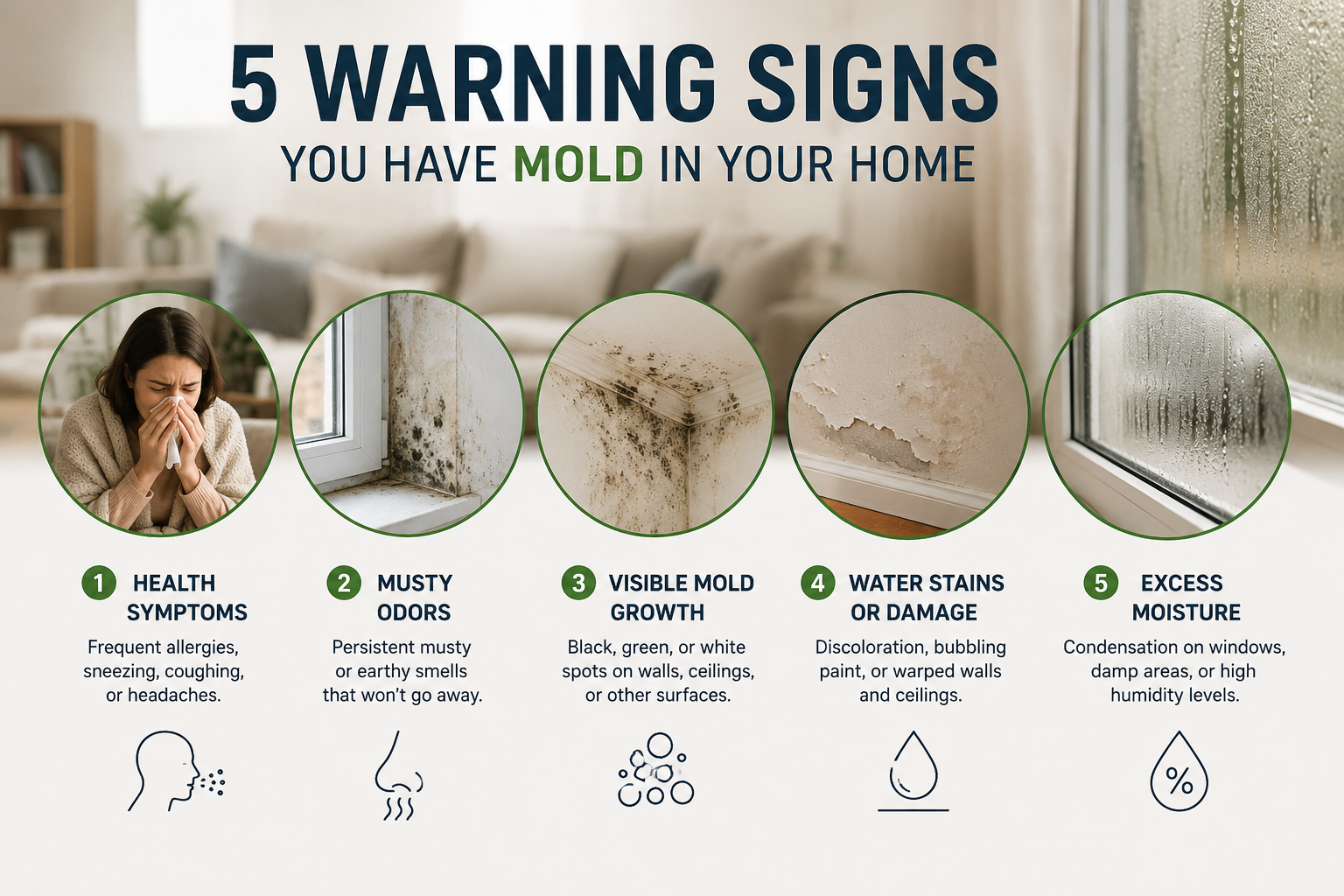
Important: visual inspection has real limits. Mold often grows hidden, inside walls, under flooring, above ceiling tiles, in HVAC ducts. If you can smell it but can't find it, that's a strong sign you need a professional inspection.
When to Call a Professional
You should not rely on a visual inspection alone if:
- Someone in the home has symptoms that seem to ease when they are away from the property (and has spoken with a physician)
- You've had any water intrusion, a leak, flood, or plumbing failure, in the past 12 months
- You can smell a musty odor but can't locate the source
- You see discoloration on walls, ceilings, or floors that keeps coming back after cleaning
- You are buying or selling a home in Los Angeles
A certified mold inspector evaluates visible conditions and uses a moisture meter to look for moisture problems, and recommends air or surface sampling when it is appropriate. The laboratory reports the fungal types or structures identified according to its analytical method, with counts where applicable. Results are interpreted together with the inspection and moisture conditions and can help inform the remediation approach.
The Bottom Line
Mildew is usually a surface nuisance. Mold growth that penetrates materials points to a moisture problem that needs to be found and fixed. Knowing the difference helps you respond appropriately.
If you are not sure what you are dealing with, a professional inspection can help. At Just Mold Testing, we provide certified mold inspections and lab-analyzed air quality testing throughout Los Angeles County. When samples are collected, laboratory results typically come back in 24 to 48 hours, and we explain them in plain language.
Ready to schedule? Book a $49 professional mold inspection. If you proceed with mold testing during the visit, the $49 inspection fee is waived, and any recommended testing and pricing are explained before samples are collected. Call (818) 658-9336, available 24/7.
Explore Topics
Written by
Just Mold Testing
Independent mold inspection and testing company serving Los Angeles and surrounding areas. We test; we do not remediate.