Water Damage and Mold in Los Angeles Homes: What You Need to Know
Water damage is the leading cause of mold growth in LA homes. Learn how quickly mold develops after a leak, which areas are most at risk, and what to do before it spreads.

Water damage and mold go hand in hand. Whether it's a slow pipe leak behind a wall, a roof that let in last winter's rain, or a dishwasher that overflowed while you were at work, any moisture event that isn't fully dried within 24 to 48 hours creates the conditions mold needs to take hold.
In Los Angeles, this is a bigger problem than most homeowners expect. Our climate is dry most of the year, which gives people a false sense of security. But when water does get in, from plumbing failures, condensation, or the increasingly intense rain events Southern California has been seeing. It often goes undetected for weeks. By the time you notice a stain or a smell, mold may already be well established.
How Quickly Does Mold Grow After Water Damage?
Faster than most people think. Under the right conditions, warmth, moisture, and an organic surface like drywall, wood, or insulation, mold can begin colonizing within 24 to 48 hours of a water event.
Here's a rough timeline:
- 0–24 hours: Moisture saturates building materials. No visible mold yet, but spores already present in the air begin to settle and germinate.
- 24–48 hours: Mold begins to grow on wet drywall, wood framing, and insulation. Still not visible to the naked eye.
- 3–7 days: Visible mold colonies appear. Musty odor may become noticeable.
- 1–2 weeks: Mold spreads to adjacent materials. Structural damage to drywall and framing begins.
- Beyond 2 weeks: Extensive colonization. Remediation becomes significantly more complex and costly.
The takeaway: speed matters. The EPA advises drying water-damaged areas and items within 24 to 48 hours to prevent mold growth. The longer materials stay wet, the more likely mold growth becomes.
The Most Common Sources of Water Damage in LA Homes
Plumbing Leaks
Slow leaks under sinks, behind toilets, or inside walls are the most common culprit. They often go undetected for months because the water never reaches the floor. It just saturates the wall cavity or cabinet base until mold makes itself known.
Roof Leaks
Los Angeles roofs take a beating from UV exposure and the occasional heavy rain. Cracked or missing tiles, failed flashing around chimneys and skylights, and clogged gutters all allow water to enter the attic and ceiling cavities. Because attics are rarely visited, roof-related mold can grow unchecked for an entire rainy season.
HVAC Condensation
Air conditioning systems produce condensate as a byproduct of cooling. When drain lines clog or drip pans overflow, that water ends up in the ceiling, wall, or floor cavity around the unit. HVAC-related mold is especially problematic because the system then circulates mold spores throughout the entire home.
Appliance Failures
Dishwashers, washing machines, refrigerators with ice makers, and water heaters all have supply lines and drain connections that can fail. A slow drip behind a refrigerator or under a washing machine can saturate the subfloor for months before anyone notices.
Window and Door Condensation
In coastal areas of LA, Santa Monica, Venice, Culver City, the South Bay, marine layer moisture and temperature differentials cause condensation on windows and sliding glass doors. Over time, this moisture wicks into the surrounding framing and drywall, creating chronic low-level moisture that mold thrives in.
Slab Leaks
Older homes in the San Fernando Valley, Pasadena, and other inland communities frequently develop slab leaks, breaks in the copper supply lines embedded in the concrete foundation. The water wicks upward through the slab and into flooring, baseboards, and walls. Slab leaks are often diagnosed only after mold appears at floor level.
Which Areas of Your Home Are Highest Risk?
Not all rooms are created equal when it comes to mold risk after water damage. The highest-risk areas in LA homes are:
Bathrooms, Chronic humidity, grout failures, and slow leaks around tub and shower surrounds make bathrooms the most common location for mold in any home.
Under kitchen sinks, The cabinet under the kitchen sink is dark, poorly ventilated, and often the first place a supply line or drain connection fails. Check it regularly.
Attics, Roof leaks and inadequate ventilation make attics a prime mold environment. Because they're out of sight, attic mold often reaches advanced stages before discovery.
Crawl spaces, Homes with raised foundations have crawl spaces that are in direct contact with soil moisture. Without proper vapor barriers and ventilation, crawl spaces accumulate humidity year-round.
Around HVAC equipment, Air handlers, ductwork connections, and condensate drain lines are all potential moisture sources. Mold in HVAC systems is particularly serious because it spreads spores throughout the home every time the system runs.
Behind walls near exterior plumbing, Hose bibs, outdoor shower connections, and irrigation system tie-ins can leak into wall cavities without any visible sign on the interior.
Signs You Have Mold After Water Damage
Even if you can't see mold, these signs suggest it may be present:
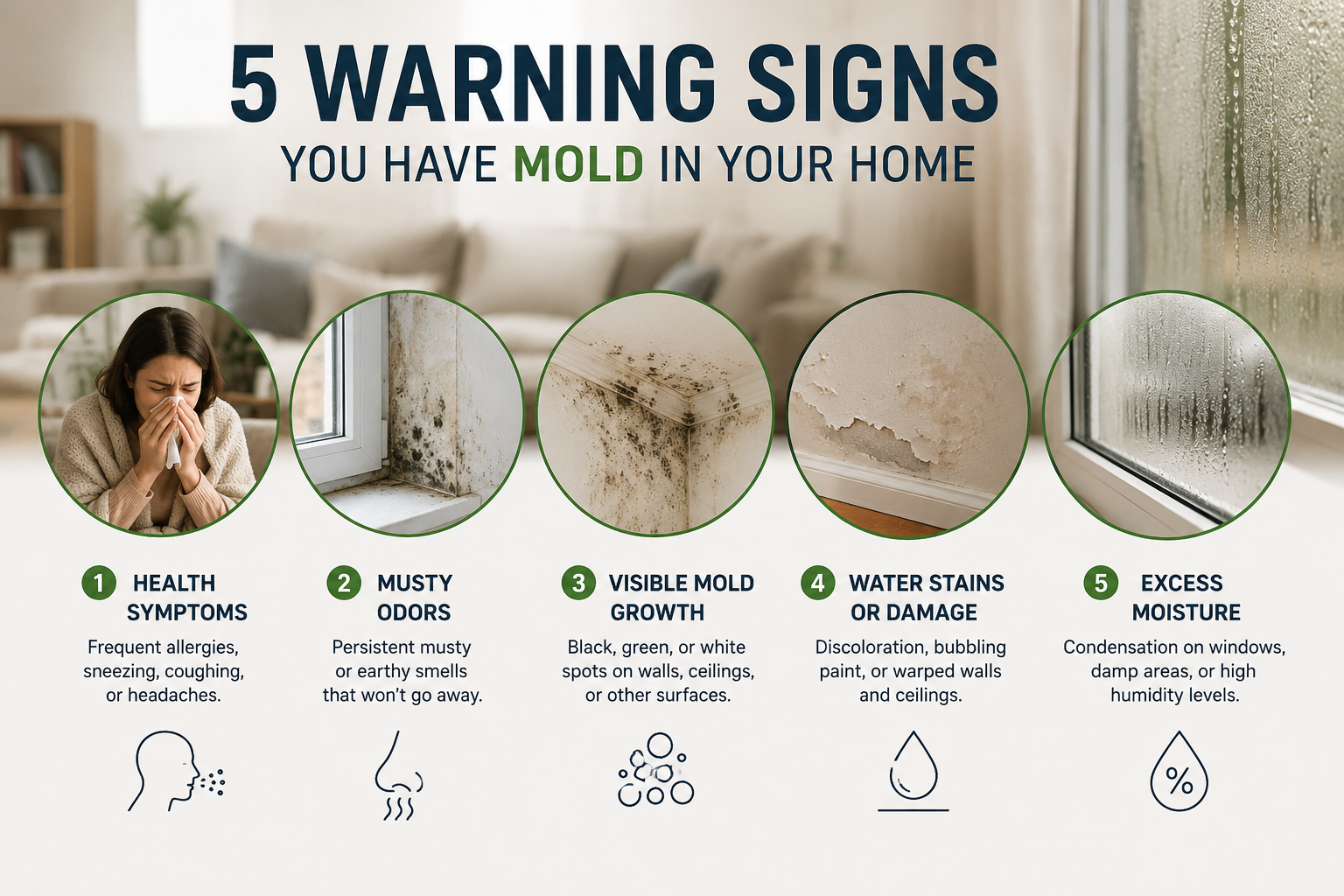
- Musty or earthy odor that persists even after cleaning
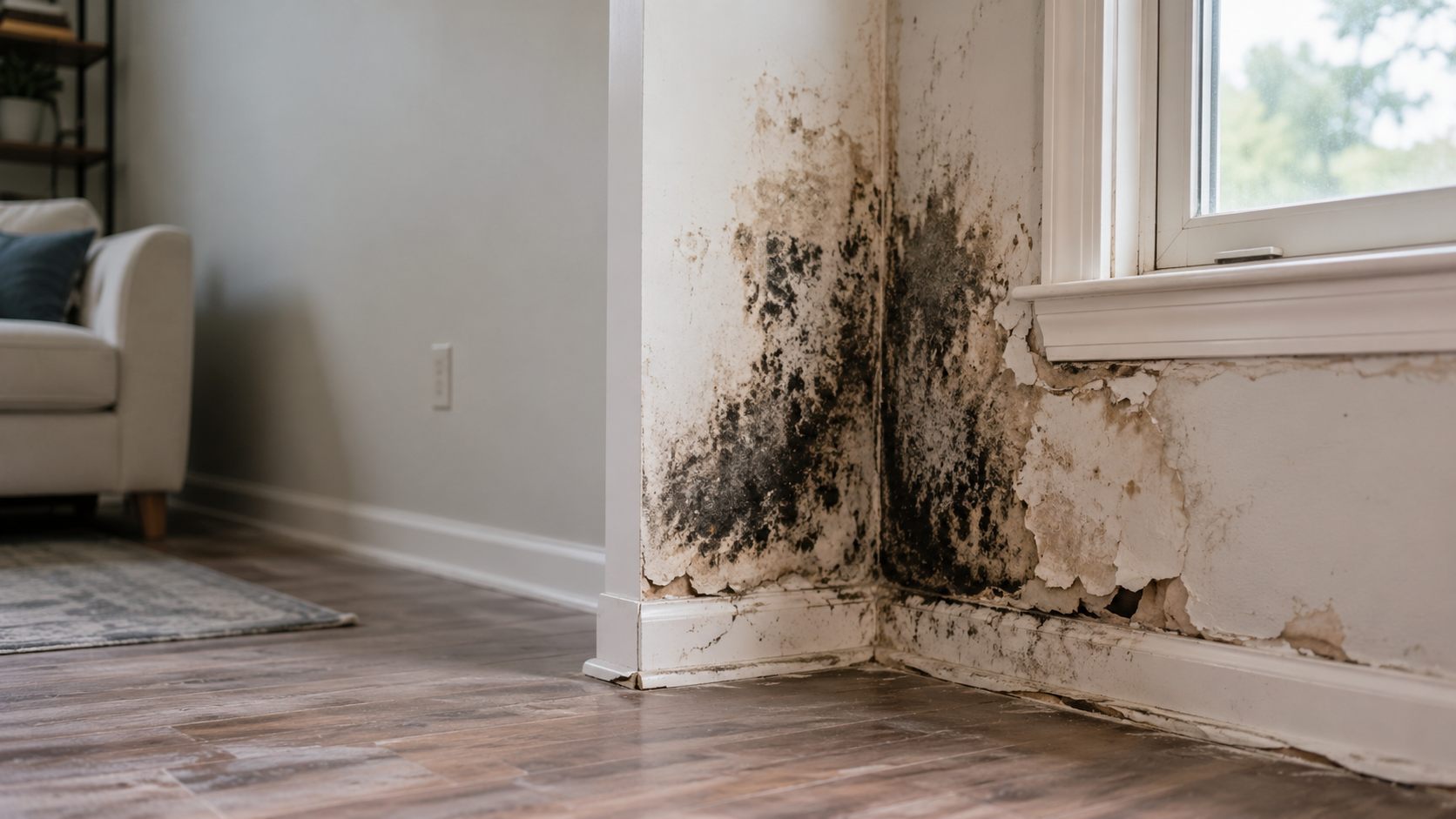
- Discoloration or staining on walls, ceilings, or floors, especially in shades of gray, green, black, or brown
- Bubbling, peeling, or warping paint or wallpaper
- Soft spots in drywall or wood surfaces
- Allergy-like symptoms (sneezing, runny nose, itchy eyes, coughing) that improve when you leave the home
- Visible water stains that were never properly dried and remediated
If you had a water event, even one you thought was fully cleaned up, and you're experiencing any of these signs, a professional inspection can evaluate moisture and visible conditions and determine whether sampling is appropriate. Laboratory results, when sampling is done, are interpreted together with the inspection and moisture conditions.
What to Do Immediately After Water Damage
1. Stop the source. Turn off the water supply if it's a plumbing leak. Contact your roofing contractor if it's a roof issue. Don't let the moisture event continue.
2. Remove standing water. Use wet/dry vacuums, mops, and towels to remove as much water as possible immediately.
3. Dry aggressively. Open windows, run fans, and use dehumidifiers. The goal is to get affected materials dry within 24–48 hours. In LA's warm climate, this is achievable, but only if you act fast.
4. Document everything. Photograph all damage before cleanup. This is essential for insurance claims.
5. Don't just dry the surface. Drywall, insulation, and wood framing hold moisture long after the surface feels dry. If materials were saturated, they may need to be removed and replaced, not just dried in place.
6. Get a mold test before closing walls. If you're having drywall repaired or replaced after water damage, get a mold test before the new drywall goes up. Once the wall is closed, any mold left inside becomes a hidden problem that will resurface later.
Does Homeowner's Insurance Cover Mold from Water Damage?
Insurance coverage for mold testing, water damage, or remediation depends on the policy language and the cause of loss. Property owners should review their policy and speak with their insurance professional or carrier regarding coverage for a specific claim.
If you are filing a claim, a written inspection report with dated photos, moisture observations, sample locations, and independent laboratory results documents the conditions observed at the time of inspection. Whether it is sufficient for a particular claim is decided by the carrier.
Why Independent Mold Testing Matters After Water Damage
If you hire a remediation company to clean up water damage, they may offer to test for mold as part of their service. Separating testing from remediation avoids a potential financial conflict, because the company evaluating the property does not profit from the remediation work that may follow.
Independent mold testing, by a company that does not perform remediation, documents the conditions observed and what the laboratory finds, without a stake in the remediation work.
Just Mold Testing is inspection and testing only. We test, we report, and we explain the findings. If remediation is needed, we will tell you what the findings show, and you can hire whoever you choose to do the work.
Get Tested After Any Water Event in Your LA Home
If your home has experienced water damage, recently or in the past, don't wait for visible mold to appear. Growth can become established inside walls, floors, or ceilings before it is visible.
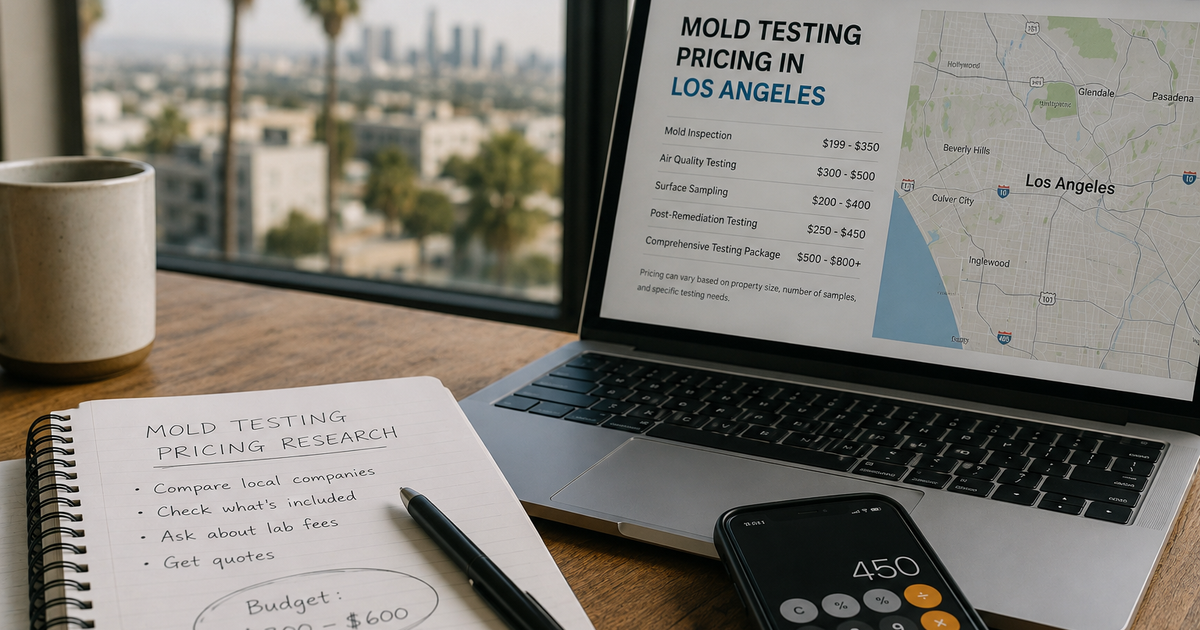
Book a $49 professional mold inspection, waived if you proceed with mold testing during the visit, or call us at (818) 658-9336. We are available 24/7, serve Greater Los Angeles, and laboratory results are typically available within 24 to 48 hours.
Explore Topics
Written by
Just Mold Testing
Independent mold inspection and testing company serving Los Angeles and surrounding areas. We test; we do not remediate.